Walk onto any type of court, oval, or gym in Osborne Park on a weekend and you will certainly see the same thing: children pressing their limitations, adults chasing after personal bests, trainers and instructors handling efficiency, motivation, and safety and security. The majority of days the worst you will handle is a twisted ankle or a bruised vanity. Every now and then, however, sport transforms major really quickly.
I have actually spent years around area sport and professional programs, and the pattern is always the same. The result of a significant occurrence seldom comes down to elegant tools or medical lingo. It boils down to the first 5 minutes and what the instructor or trainer really does.
If you trainer a team, run a health club, or work as a personal fitness instructor in Osborne Park, strong first aid abilities are not a nice additional. They are core to your duty, as vital as program style or match tactics.
This guide unboxes the essential emergency treatment abilities for sports instructors and instructors, and exactly how high quality emergency treatment training in Osborne Park can construct those skills in a sensible, confidence-building way.
Why emergency treatment abilities matter a lot in sport
There are two hard realities that every trainer at some point learns.
First, significant incidents are rare, but not unusual sufficient. Cardiac arrests on the field, significant cracks, back injuries, warm stroke, and extreme allergies do occur in community sporting activity. I have actually seen each of these at the very least as soon as, generally on what was implied to be a regular session.
Second, when something severe occurs, you will certainly not have time to look plans or see a video clip. You will certainly draw on whatever you have actually practised. If your only exposure to mouth-to-mouth resuscitation or hemorrhaging control was a half-hearted program ten years back, that is what your brain will certainly provide you.
The difference in between an instructor who has actually kept their first aid and CPR training fresh and one that has not is apparent in an emergency. The prepared instructor:
- Recognises the seriousness earlier. Takes charge of the scene. Delegates clearly. Starts reliable first aid within seconds, not minutes.
That home window is essential. With heart attack, every minute without CPR and defibrillation can drop survival opportunities by 7 to 10 percent. With heavy blood loss or anaphylaxis, hold-up means a lot more shock, more damages, and much longer recovery, even if the person survives.
The kinds of emergencies instructors in Osborne Park actually see
Textbooks have a tendency to separate problems nicely. Fact on the sideline is messier. Right here is what commonly turns up in neighborhood sporting activity settings.
Sudden heart attack and collapse
It is simple to think of heart attack as an older individual's trouble, yet sporting activity adds special risks. Undiagnosed heart conditions, stimulants, dehydration, and large physical effort all integrate. A lot of coaches I recognize who have actually faced a collapse will certainly inform you they nearly waited too long since the person "appeared like they simply collapsed".
The essential skill here is not just chest compressions. It is recognising that somebody is less competent and not breathing normally, and afterwards making the jump from "this is scary" to "this is cardiac arrest, start CPR and send out for the AED currently".
Head knocks and feasible concussion
Contact sporting activity, indoor courts, and even cross-training sessions all carry a blast danger. The challenging component is that gamers usually minimise symptoms. They intend to stay in the game or finish the set.
You need a practical strategy:
- Notice modifications in behavior, equilibrium, and speech. Ask simple, targeted concerns, not made complex tests. Enforce a "when unsure, sit them out" regulation and stick to it, even in finals.
Formal trauma diagnosis belongs with a physician, however early recognition and removal from play is your responsibility.
Fractures, misplacements, and soft cells injuries
Every coach has actually handled rolled ankles and strained hamstrings. Where it comes to be extra severe is when a joint looks deformed, a bone might be damaged, or the injured person can stagnate without extreme pain.
The secret abilities below are:
- Calm, very little movement of the injured area. Support with splints or improvisated padding. Recognising when something might involve the neck, spine, or pelvis, which alters everything about exactly how you move the person.
This is where a strong emergency treatment course in Osborne Park settles. Good training does not simply reveal you representations, it provides you the feel of what safe assistance and positioning really look like.
Breathing troubles, bronchial asthma, and anaphylaxis
Osborne Park has a large jr showing off area, which indicates bronchial asthma and allergic reactions are constantly behind-the-scenes. Both emergencies instructors should identify right away are:
Asthma strike that is not responding to regular medication. Long, drawn-out wheeze, difficulty completing sentences, and expanding distress are red flags.
Anaphylaxis, generally from food, bug stings, or https://zaneqqlq611.lucialpiazzale.com/first-aid-pro-osborne-park-behind-the-scenes-of-an-educating-session medication. It begins with swelling, hives, or throat tightness and can proceed swiftly to breathing problem and collapse.
In both instances, very early activity is every little thing. In an effectively run first aid and CPR program in Osborne Park, you should get hands-on experiment spacers, inhalers, and EpiPens, not simply theory.
Heat ailment and dehydration
Perth summertimes are unforgiving, and also spring and fall can be hotter than several visiting teams anticipate. Trainers and instructors in Osborne Park regularly take care of:
- Heat exhaustion - wooziness, nausea or vomiting, frustration, hefty sweating, and fatigue. Heat stroke - complication, possible collapse, hot dry or really perspiring skin, and a clinical emergency.
You demand to be able to differentiate someone who simply requires a remainder and fluids from someone relocating right into hazardous heat stress and anxiety. Air conditioning approaches, shaded rest locations, and customized training become part of emergency treatment too.
Core emergency treatment abilities every trainer need to have mastered
You can not be experts in only "sport-specific" emergency treatment. Emergency situations in showing off settings vary from cardiac arrest in spectators to choking at the canteen. A strong base of basic abilities is non-negotiable.
Calm scene evaluation and safety
Rushing in without a fast scan is exactly how helpers become additional casualties. In technique, a good coach establishes a behavior:
First, pause for 2 or 3 secs and try to find dangers: moving lorries, loosened equipment, ongoing play, electric hazards, aggressive behaviour.
Second, determine whether you can make the scene much safer by quiting play, relocating other athletes away, or rearranging equipment.
Third, only after that go hands-on, with gloves if they are available.
Good emergency treatment training in Osborne Park spends live on these basics instead of glossing over them. It feels slow-moving in class but it makes you quicker and safer in the real event.
Calling for assistance effectively
Almost every case I evaluate officially or informally has the exact same stumbling block: the call to emergency services was postponed, uncertain, or both.
You should fit doing two points right away:
- Direct a specific person to call 000 and report back. Give a precise location, consisting of access points, gates, or spots. For example, "northern end of the main oval at [venue name], off [road], utilize gate 2 near the club areas".
If you run a place or club, stroll it as if you are a rescue staff: where would certainly you park, what would block a cot, what signage is confusing? Integrate that right into your emergency plan.
CPR that is current and confident
CPR is the ability no one wants to utilize however everybody has to have. Guidelines alter with time, and muscle memory fades. That is why trainers and instructors are strongly urged to take a CPR refresher course Osborne Park based at the very least every 12 months.
A great CPR training Osborne Park program will certainly:
- Teach you to rapidly check responsiveness and breathing without wasting time. Drill the correct compression depth and price using comments mannequins, not guesswork. Show you how to integrate breaths effectively, or switch to hands-only CPR if appropriate. Practise using an AED till it really feels routine, not frightening.
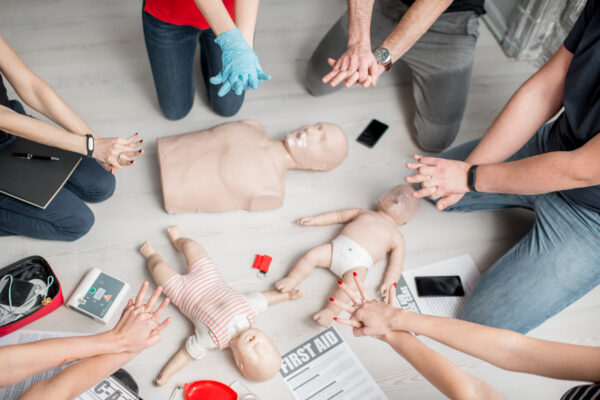
Look for first aid and CPR courses Osborne Park service providers that place you with practical situations: a collapse on the sideline, in a cramped gym, or on a difficult outside court. CPR on a carpeted classroom floor is far better than absolutely nothing, yet it is not what you will certainly face.
Using AEDs with confidence
Osborne Park sporting activities districts, gyms, and area locations are progressively outfitted with AEDs. The technology is simple, however doubt still sets you back time.
Your objective is to be the individual that can state with authority, "Obtain the AED from the club room wall surface" and then position the pads, comply with the triggers, and clear everybody without panicking.
Any significant first aid training in Osborne Park should include AED make use of as standard, not as an add-on. If the program you are taking into consideration does not, keep searching.
Bleeding control and wound care
Sport entails metal goalposts, sharp edges, and high-speed crashes. Cuts, abrasion, and much deeper lacerations are common. From an instructor's perspective, 3 priorities matter:
Control the bleeding. Firm, straight stress with a pad or plaster. If blood soaks via, include more layers as opposed to regularly eliminating the initial one.
Protect against infection. Clean around the injury where feasible, prevent touching it straight, and gown it properly.
Know when blood loss is life-threatening. Bright red, streaming blood or saturating plasters rapidly mean you might be handling arterial blood loss. That changes your seriousness and warrants an immediate 000 call, even if the individual urges they are "fine".
Managing suspected neck and spinal injuries
It just takes one unpleasant fall, dive, or deal with to transform a routine video game into a thought spinal event. The rule of thumb is simple: if the system of injury is worrying and the person has neck pain, unusual tingling, or weakness, treat it as a prospective spinal injury till tested otherwise.
Your task is not to identify. Your task is to:
Keep the individual still, specifically their head and neck.
Prevent others from crowding, lifting, or dragging them "out of the way".
Support the head according to the spinal column without applying force.
Wait for paramedics unless the atmosphere is plainly unsafe and you should relocate them.

Practical emergency treatment courses Osborne Park based ought to offer you hands-on practice in hand-operated in-line stabilisation and secure motion strategies, also in a standard degree course.
Recognising medical problems that show up in sport
Many professional athletes, even juniors, train and contend while handling bronchial asthma, diabetes, epilepsy, or heart disease. Trains and instructors do not require to be professionals, but you do need working knowledge.
For example, with a diabetic person athlete you need to know how to spot reduced blood sugar: shakiness, complication, sweating, weak point, and often uncommon practices. Knowing when to provide fast-acting carbs and when to require immediate help can protect against a full collapse.
With epilepsy, recognizing the difference in between a typical known seizure pattern and something prolonged or different overviews your choice to escalate. Good first aid and CPR Osborne Park programs currently frequently weave these situations into training for sport-focused participants.
Building a sensible emergency reaction prepare for your team or facility
Skills imply even more when they sit first aid classes nearby inside a clear plan. In my experience, the groups and gyms that handle emergency situations best have actually analyzed the basics before something goes wrong.
Here is an easy, field-tested structure for a sports emergency action strategy:
Who takes cost in an emergency situation if the head coach is the one damaged or unavailable. Where the first aid package, AED, and emergency situation contact listing are stored, and who examines them weekly. How the address, key sites, and gate codes are displayed so any type of grownup can direct an ambulance in. What the "stop play" signal is and that has authority to utilize it across several areas or courts. How cases are recorded later on, consisting of witness information and activities taken.That is a whole lot to hold in your head, so place it on a one-page sheet in your set and in the club spaces. Stroll new aides and volunteers through it pre-season. Rehearse it quickly before significant events.
Choosing the right first aid training in Osborne Park
Not all training courses are equivalent. If you are a sporting activities trainer or trainer, you desire something that fits your actual atmosphere, not just a generic tick-the-box course.
When you check out Osborne Park emergency treatment courses, review them versus a couple of functional questions.
Does the carrier comprehend sporting activity settings? Inspect whether they discuss scenarios like on-field incidents, change space collapses, and health club settings. A carrier such as Emergency treatment Pro Osborne Park, for instance, frameworks most of its sessions with workplaces and sports in mind, which is far more appropriate than purely office-based scenarios.
Is CPR training Osborne Park based and hands-on, or primarily theory? You want time on the floor, practicing compressions and AED utilize with feedback, not just seeing slides.
Can you incorporate an emergency treatment and CPR course Osborne Park in someday? For several trainers handling work and family members, single-day first aid and CPR courses Osborne Park large are much more sensible than different bookings.
Will you entrust an across the country recognised first aid certificate Osborne Park employers and clubs accept? Inspect the certification status and whether the material straightens with present Australian Resuscitation Council guidelines.
Is there a clear reminder or path for an annual CPR refresher course Osborne Park location hassle-free? Some service providers use structured refresher course sessions so you keep skills fresh without duplicating whatever from scratch.

If a training course feels hurried, crowded, or heavily sales-focused, trust your instincts. Quality first aid training Osborne Park wide ought to really feel tranquil, structured, and practical. You need to leave worn out in a good way, like after a solid training session.
Integrating first aid right into your day-to-day coaching
The best instructors and fitness instructors do not treat first aid as a different box. They fold up security and preparedness into their routine practice.
During pre-season, make medical info forms and emergency calls non-negotiable. Inquire about bronchial asthma, allergic reactions, epilepsy, diabetes mellitus, heart background, and existing medicines. Motivate athletes to inform you very early as opposed to trying to be "challenging".
At the start of a season or program, walk the team with where the emergency treatment kit and AED are. Point out that is Osborne Park emergency treatment educated, and that has CPR Osborne Park certification. This normalises security and might trigger other volunteers to upskill.
During hot periods, readjust work, schedule a lot more water breaks, and instruct professional athletes how to acknowledge very early warmth illness in themselves and teammates. Prevention is a kind of very first aid.
After any type of event, also a small one, debrief briefly. What worked, what was complicated, what tools was tough to locate? After that readjust your arrangement, package, or plan accordingly.
Over time, this builds a society where first aid is not just the instructor's secret responsibility. It comes to be shared awareness across the group.
How frequently needs to trainers upgrade their training?
An usual concern from active trainers is "How often do I really require to redo this?" From a useful viewpoint:
CPR must be refreshed at least annual. Pressing to the appropriate deepness and price, taking care of exhaustion, and integrating breathing and AED usage is physical, not simply psychological. Without practice, technique slips.
Full emergency treatment courses in Osborne Park are often renewed every three years, but many trainers pick a much shorter cycle as a result of the direct exposure and responsibility they carry, particularly in get in touch with or high-intensity sports.
If your club or fitness center can coordinate group reservations with an Osborne Park emergency treatment training service provider, you can turn it right into a yearly component, similar to pre-season testing or certification updates. Knowing together with your training team additionally makes circumstances a lot more practical and constructs common confidence.
What a "great day" of first aid looks like
Coaches in some cases tell me they feel like their training was "wasted" because they never had to utilize the dramatic abilities, like mouth-to-mouth resuscitation or spinal management. I always press back carefully on that particular idea.
On a good day, solid emergency treatment knowledge implies:
You notice early signs of warm illness and change the session, so no one collapses.
Your athletes trust you enough to discuss upper body rigidity or unusual lightheadedness, and you send them for analysis rather than ignoring it.
You manage an awful cut rapidly and comfortably, so the rest of the team stays focused and the hurt player really feels cared for, not panicked.
You impose a trauma sit-out rule constantly, even when gamers objection, avoiding 2nd effect risks.
You run a pre-season bronchial asthma check-in, and as a result, one athlete updates their activity strategy and inhaler, staying clear of an assault later.
None of that makes headings, however it is exactly what experienced, positive trains and fitness instructors do as component of their typical practice. The dramatic conserves are just the visible pointer of a much larger iceberg of avoidance, very early acknowledgment, and calm response.
Bringing all of it with each other in Osborne Park
If you trainer, handle, or train professional athletes in this area, you sit close to a number of high-quality alternatives for emergency treatment course Osborne Park based training. Whether you select a compact CPR course Osborne Park session or an extensive Osborne Park emergency treatment course that blends first aid and CPR Osborne Park content, the objective is the same: to turn unclear worry into specific, practised skill.
Look for courses that feel like they belong on your sideline or in your fitness center, not in a common conference room. Insist on plenty of situation method, actual discussion of local risks, and chances to ask "Suppose it happens such as this?" based upon your very own sport.
When you next upgrade your accreditation, reward emergency treatment training Osborne Park sessions as an equivalent partner to techniques, programming, and athlete development. Your athletes and customers are trusting you with their performance, but additionally with their safety and security. With the ideal training and frame of mind, you will certainly be ready when it counts.
FirstAidPro – Osborne Park Osborne Park Bowling Club, 31 Park St, Tuart Hill WA 6060 Phone: (08) 7120 2570 Website: firstaidpro.com.au FirstAidPro – Osborne Park is one of Perth's most trusted providers of nationally accredited first aid and CPR training. Conveniently situated at the Osborne Park Bowling Club on Park Street in Tuart Hill, the centre is easily accessible by car, bus, or on foot, with free on-site parking available for all attendees. Established in 2010, FirstAidPro is a nationally registered training organisation (RTO) that has trained over 3 million Australians in life-saving skills. The Osborne Park venue is staffed by experienced, industry-qualified trainers and offers courses seven days a week, with both morning and evening sessions to accommodate a range of schedules. Courses available at this location include the CPR Course (HLTAID009) from $45, the First Aid & CPR Course (HLTAID011) from $97, and the Childcare First Aid Course (HLTAID012) from $119. All training is delivered face-to-face — no pure online or e-learning components — ensuring participants gain genuine hands-on skills. Upon successful completion, students receive their nationally recognised certificate the same day. Whether you need first aid certification for workplace compliance, childcare requirements, career advancement, or personal preparedness, FirstAidPro Osborne Park makes the process affordable, fast, and straightforward. Book online at firstaidpro.com.au or call (08) 7120 2570 today. FirstAidPro – Osborne Park Osborne Park Bowling Club, 31 Park St, Tuart Hill WA 6060 (08) 7120 2570 firstaidpro.com.au